zarumbatus
Season 1 · Chapter 1
Why I'm teaching a machine to draw like me
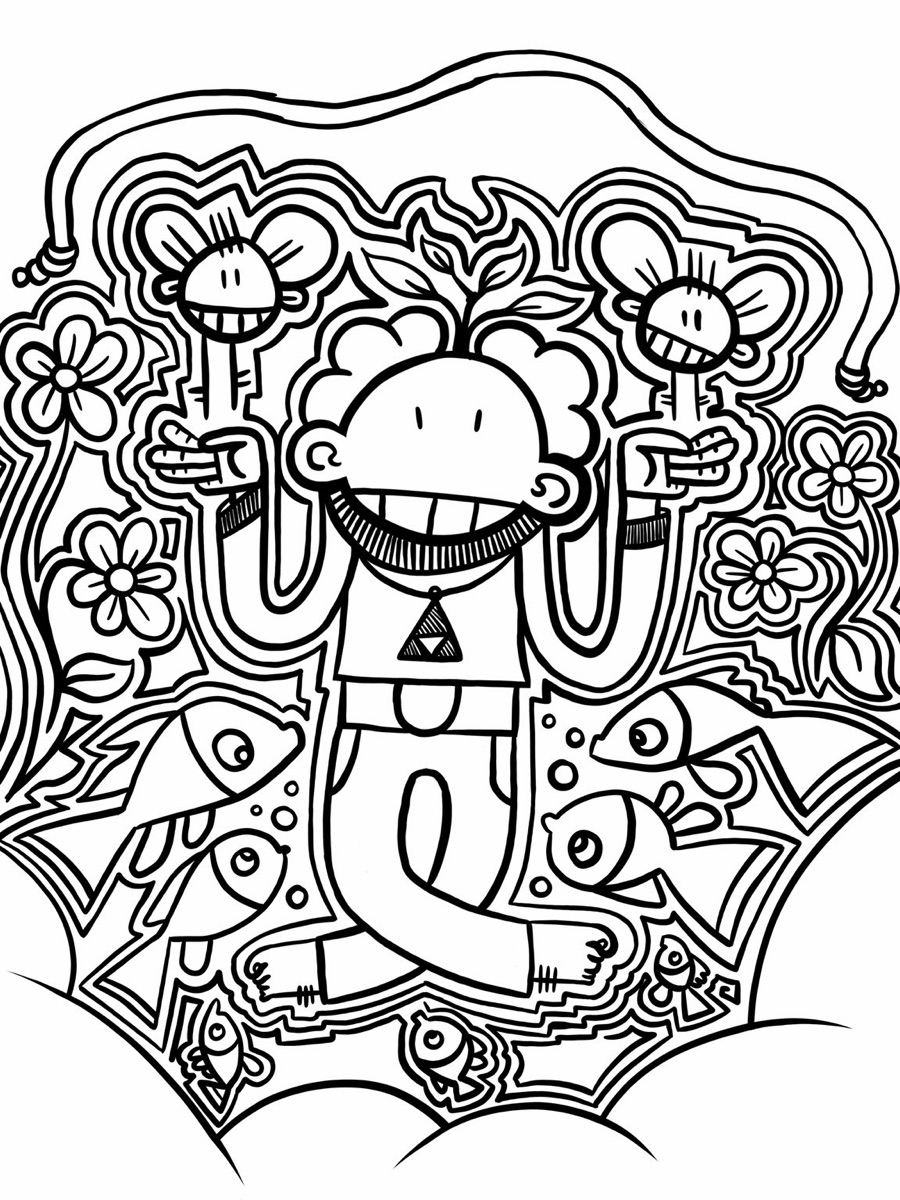
I always draw the same things, and I have no intention of stopping.
Characters grinning with every tooth they have, as if they had just heard excellent news. Flies. Speech bubbles with a question mark inside, because everyone is allowed to wonder. And patterns, everywhere, until the page doesn’t have a single square inch of white left to breathe.
And then there’s the fly.
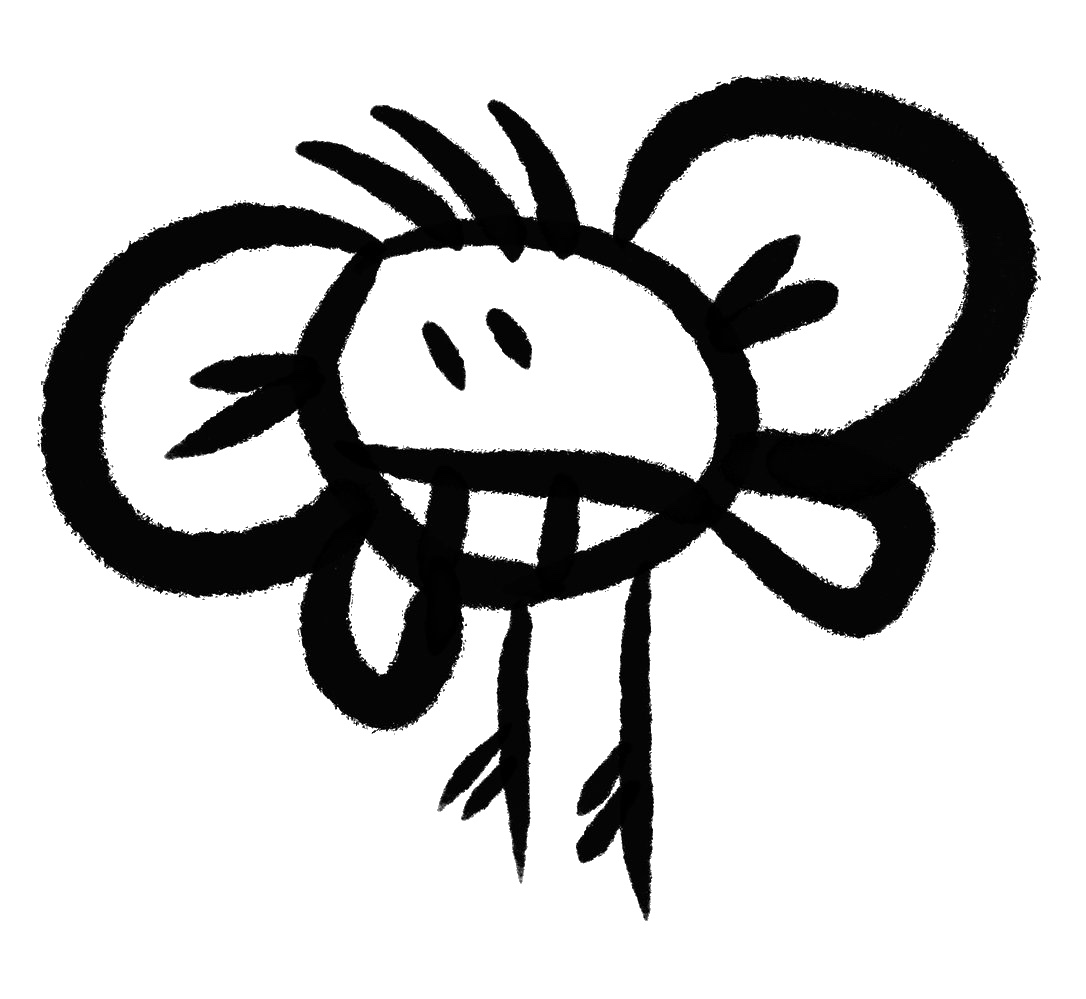
Quite a few people know me through her. She’s my signature, only chattier. She never asked anyone for anything; she just has two teeth and an unshakeable optimism.
So here is the question behind this site: can a machine learn to draw like that? Not “in the style of” Van Gogh or a Japanese master, the way image generators do it in three clicks. Like me. With my habits, my clumsiness, and my flies.
How I draw (yes, there is a method, more or less)
To teach something to someone, you first have to be able to explain it. So I had to watch myself draw, which is a strange experience: like walking your whole life and suddenly wondering which foot goes first.
- I draw a character. Completely flat, in 2D. No perspective, no volume, no shadows. My characters live in a world with no depth, and they seem perfectly fine with it.
- I go around it once, with a single line.
- I add little strokes all around, then I go around the little strokes. Usually I stop there. Sometimes I add another layer, or two. It depends on the character, the mood, the coffee.
- I draw the neighbour: another character, a fly, a skull that also smiles. Same treatment.
- Gaps are left between all these little folks. And I fill those gaps with patterns, one by one, until the page is as packed as the underground at rush hour.
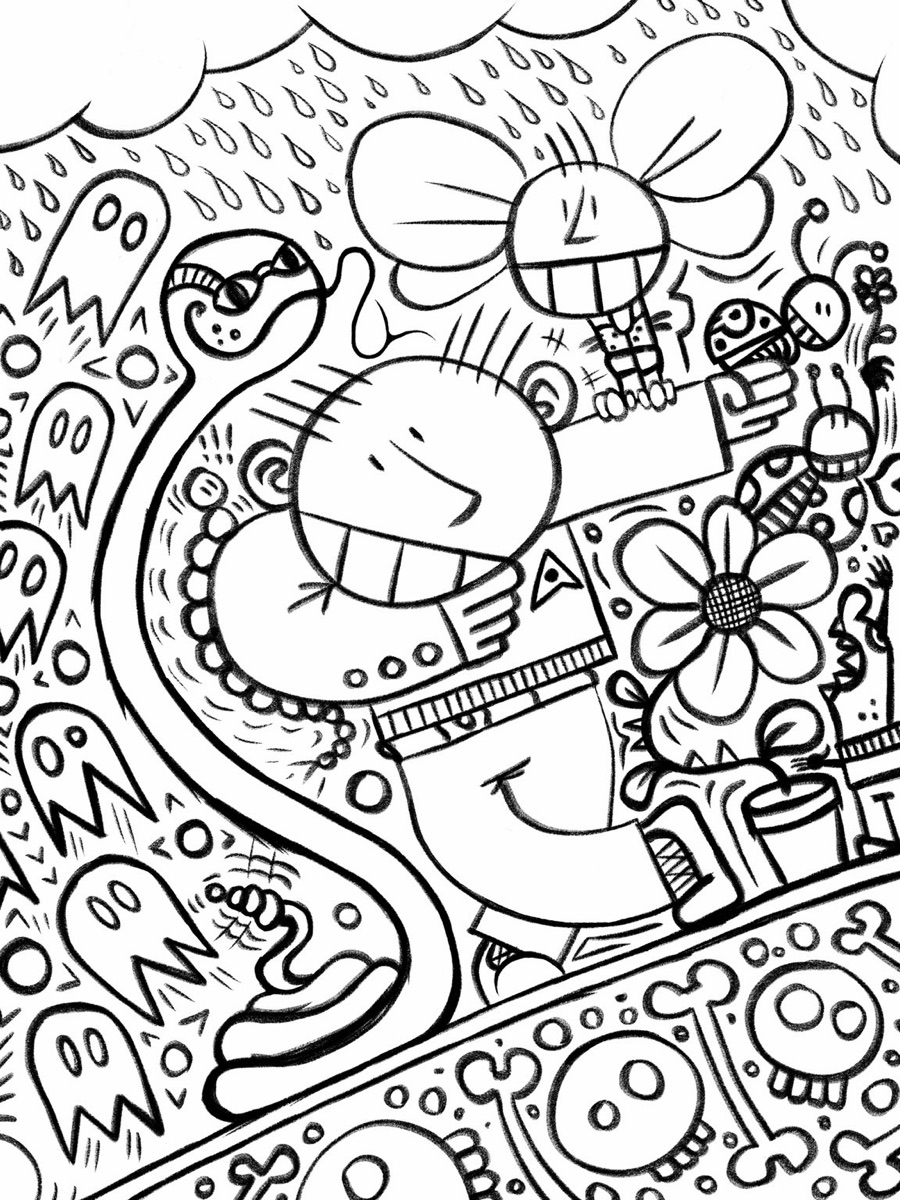
That last step is what makes a page look like one of mine. It’s also exactly the step machines get wrong.
The day I asked an AI for help
I make little films with a desk robot (another story, told on digitan.fr). One of them needed a dream sequence drawn in my style. I did what everybody does: I described my style in words and asked a big artificial intelligence to draw.
It made beautiful pictures. Clean, impressive, and completely off. Volume everywhere, perspective, polished shadows. And the flies… let’s say they were the ugliest flies I could have drawn on a Monday morning without my glasses.
It’s not its fault. It has seen millions of images; it knows what “black ink drawing” means in general. But it has never watched me draw. It doesn’t know my fly.
The idea: show it my sketchbooks
Picture a huge artist who can draw anything, but who has never seen your work. Now slip a small notebook into their pocket: a few dozen of your drawings, with one sentence under each saying what’s in it. They leaf through it, again and again, until your hand feels familiar.
That’s roughly what I’m doing. The small notebook has a slightly barbaric name, a LoRA (invented in 2021 by Edward Hu and colleagues at Microsoft, originally for language models), but just keep the picture of the notebook in the pocket. The big artist stays the same; the notebook nudges them towards me.
Two things mattered a lot to me:
- Everything happens at home. The learning runs on my own computer. My drawings go nowhere and feed nobody else’s machine. My flies stay home.
- I stay in charge. I can add drawings, start again, compare, and keep the version that looks like me. Nobody else decides what “my style” is.
For this first try, I picked 32 drawings out of 71. Choosing your own drawings is like choosing holiday photos to show someone: you find out you’re stricter than you thought. The next chapter tells that story.
Where this goes (dreaming a little)
Learning my line is the first step of a staircase whose top I can’t see. Here is what I imagine, in order:
- Learn the line: draw things I have never drawn, but the way I would have drawn them.
- Turn a photo into a drawing: take a picture of a teapot, a robot, my neighbour (if they agree), and get it back drawn by my hand.
- Colour, then movement: drawings that take on colours and end up moving.
- Let it choose: one day, maybe, the machine will choose what it wants to draw. On that day it won’t really be a tool anymore. More like an odd studio mate.
I don’t know how far we’ll get. This site is the logbook (who’s behind it: about), step by step, failures included. Failures especially, actually: they’re the funniest.
And speaking of which, the first one is already here. This is the very first picture from my freshly trained machine, when I asked for a bicycle against a brick wall:
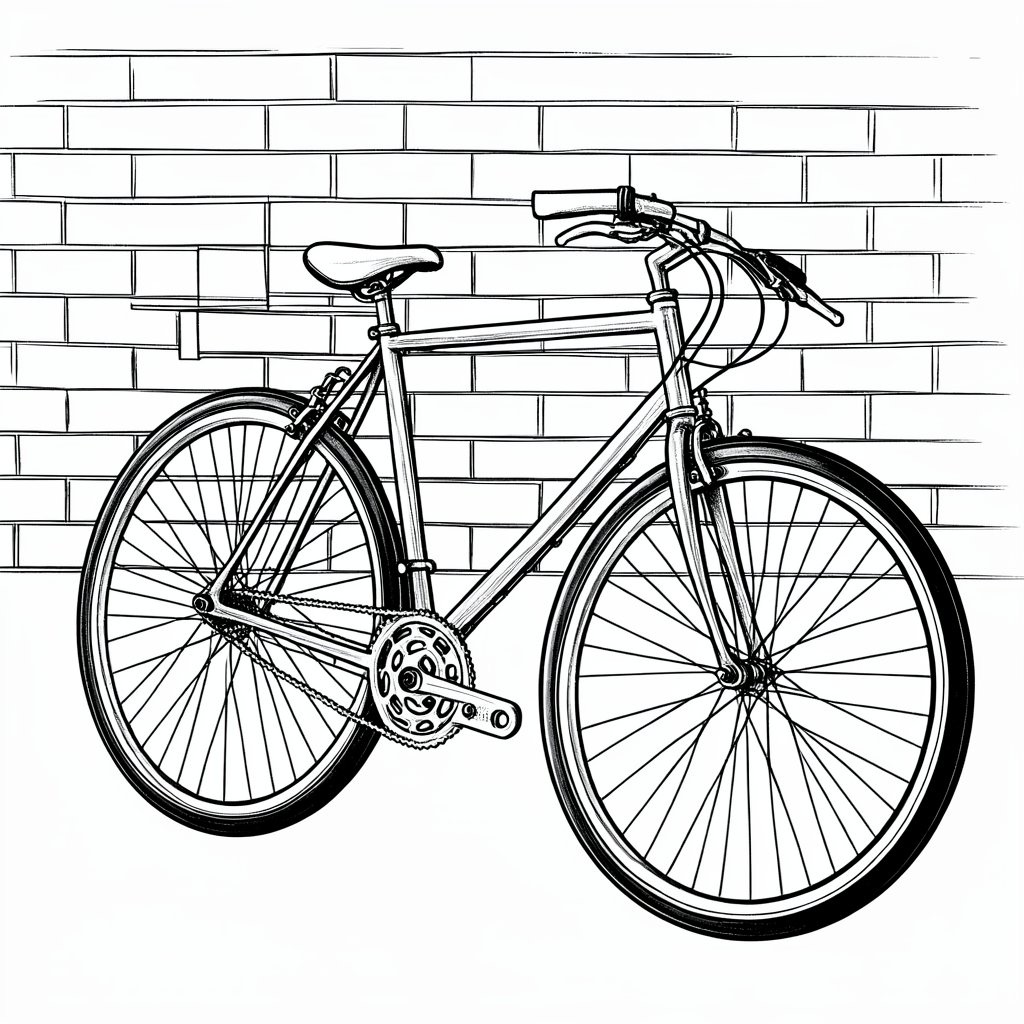
Perspective, volume, a crankset straight out of a 1912 catalogue. Nothing of me. Only the bricks vaguely got the idea. I laughed, then I looked for the reason. The answer is in a coming chapter.
Tanguy Mignot